
Running a cannabis business comes with accounting challenges that many traditional businesses do not face. Between inventory tracking, banking limitations, tax considerations, and changing regulations, small bookkeeping mistakes can become much bigger problems over time.
Strong bookkeeping practices can help cannabis businesses maintain reliable financial records, prepare for tax filings, understand business performance, and stay better prepared when financial documentation is requested.
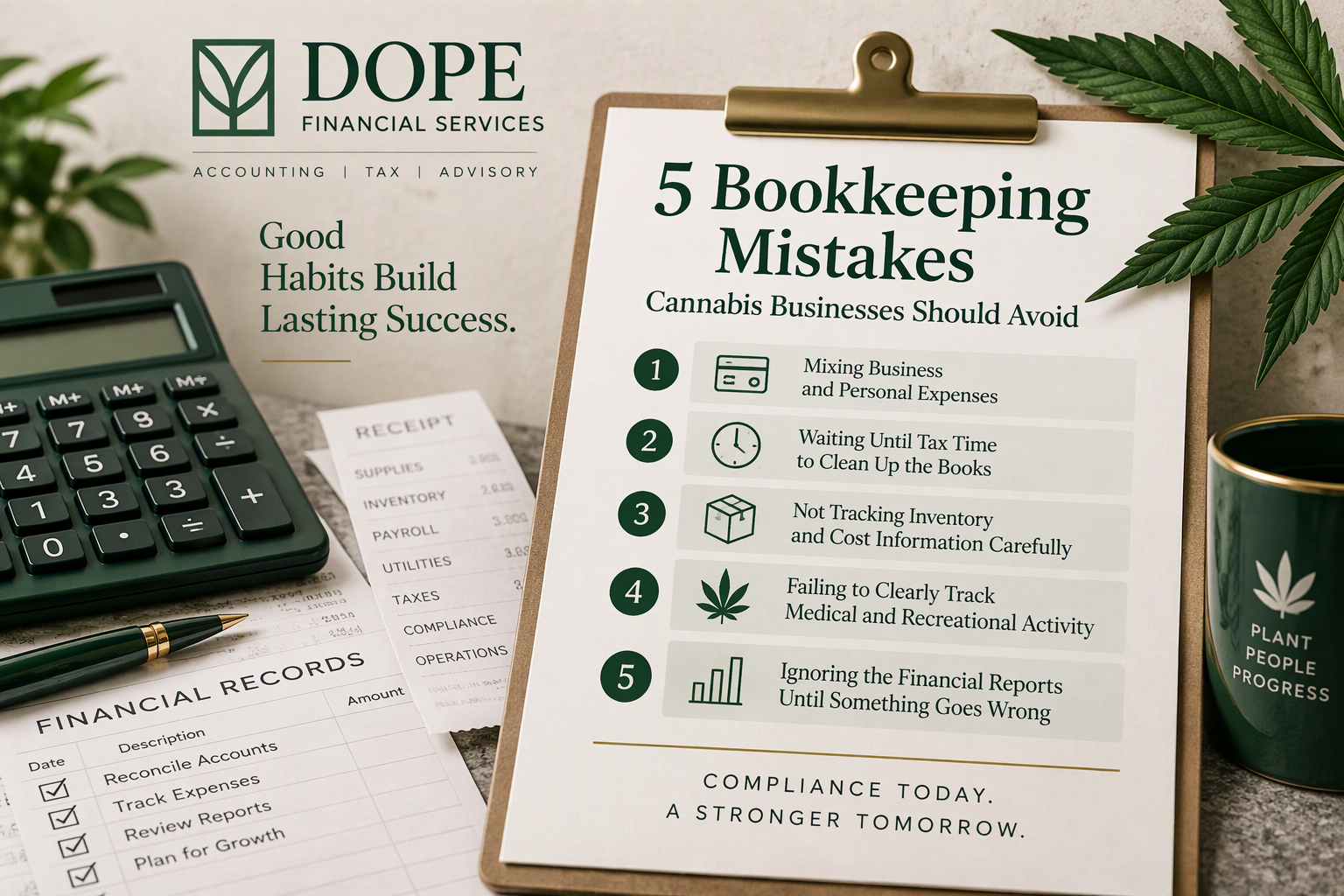
1. Mixing Business and Personal Expenses
Mixing personal and business transactions makes bookkeeping more difficult and can create unnecessary questions at tax time. Cannabis businesses should use dedicated business bank and credit card accounts whenever possible and document business transactions consistently.
2. Waiting Until Tax Time to Clean Up the Books
Bookkeeping should be an ongoing process, not a once-a-year project. Waiting until tax season to reconcile accounts and organize transactions can make it harder to identify missing information, incorrect classifications, or other issues while the details are still fresh.
Regular monthly bookkeeping and account reconciliations help keep financial records current throughout the year.
3. Not Tracking Inventory and Cost Information Carefully
Inventory accounting is especially important for cannabis businesses. Incomplete or inconsistent inventory records can affect financial reporting, tax preparation, and the ability to understand the true cost of products being sold. Inventory records should be maintained consistently and reconciled with the accounting records so that cost information can be supported when needed.
4. Failing to Clearly Track Medical and Recreational Activity
Businesses that operate in both medical and recreational cannabis markets should avoid treating every transaction as though it belongs to the same activity. Revenue, inventory, direct costs, and other expenses should be tracked with enough detail to identify the activity they relate to.
This distinction can become particularly important when tax rules differ between medical and adult-use cannabis activity. Clear, consistent records give the business and its tax professionals better information for evaluating the appropriate tax treatment.
5. Ignoring the Financial Reports Until Something Goes Wrong
Bookkeeping is not only about recording transactions. Financial reports can help cannabis business owners identify cash-flow concerns, unexpected expenses, changes in margins, and other trends before they become larger problems.
Reviewing the balance sheet and profit and loss statement regularly can also help identify unusual balances, duplicate transactions, unreconciled accounts, or classification issues that should be investigated.
Good Bookkeeping is an Ongoing Process
Cannabis businesses operate in a complex and changing environment. Maintaining accurate, organized financial records throughout the year can make tax preparation more manageable, support better business decisions, and help keep the business prepared when financial information is requested.
Dope Financial Services helps cannabis businesses maintain clean, organized accounting records with a focus on compliance, clarity, and informed decision-making.
Disclaimer: This article is for general informational purposes only and does not constitute legal or tax advice. Cannabis laws and tax rules continue to evolve. Businesses should consult qualified tax and legal professionals regarding their specific circumstances.